Citiverse è uno spazio aperto a tutte le comunità. Se vuoi aprire un gruppo locale o una sezione per la tua organizzazione, puoi contattare gli amministratori: pagina dei contatti.
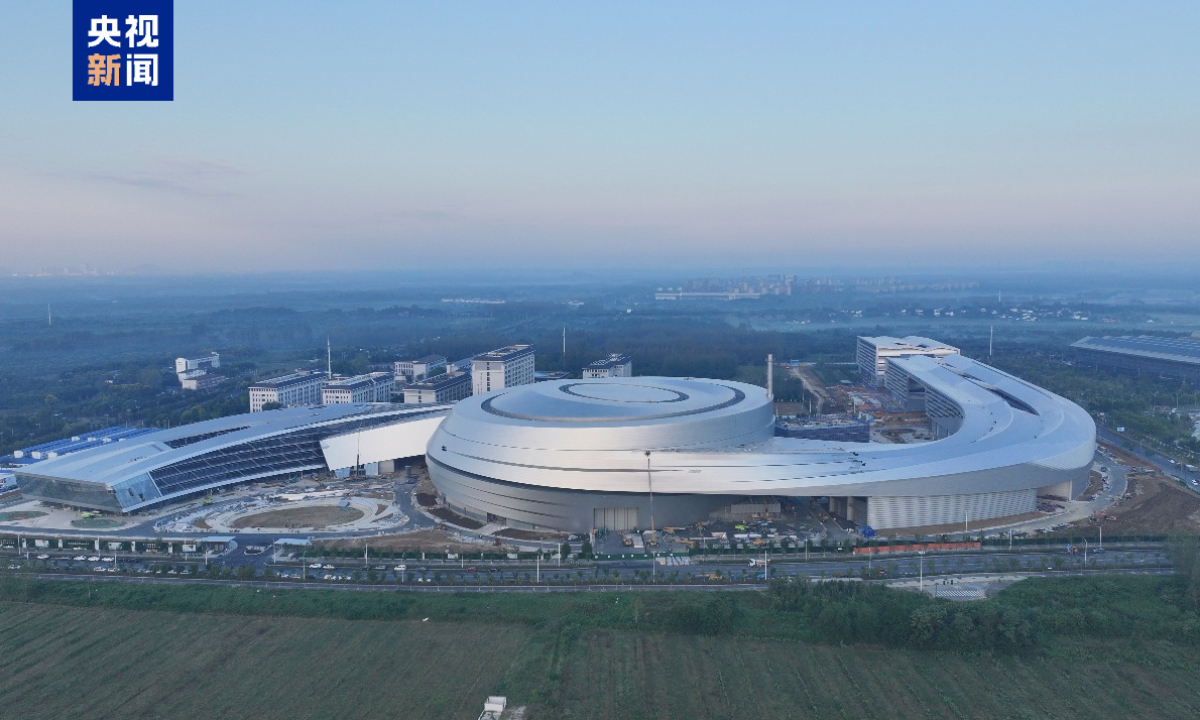
China's 'artificial sun' hits new milestone with research campus delivered for use, targets 2030 for first electricity output
-
I absolutely love how you think you know more than everyone else. Enjoy living in your doomer cult.
In my experience, only a small set of people thoroughly understand limits to growth on a finite planet. Most of them figure it out on their own. And it is a profoundly depressing experience.
Enjoy living in your gaudy pollyanna bubble.
-
In my experience, only a small set of people thoroughly understand limits to growth on a finite planet. Most of them figure it out on their own. And it is a profoundly depressing experience.
Enjoy living in your gaudy pollyanna bubble.
Your theory presumes that people will continue to sustain grain on finite resources, to the point of collapse when those resources are gone. Do you have any evidence supporting such a specific outcome, or are you glooming over theoretical possibilities that would require a consensus in ignorance toward sustainability up to the very end?
-
So then you need 15km² to cover the day, another 5-10km² to cover the night, and then however much space and lithium it's going to take to store all that energy.
And this still doesn't solve the problem once you're a little too far off the equator.
Sodium ion, ammonium/hydrogen production, elevated hydro, compressed air, etc. There are lots of options that are being built up. There is also a lot of desert in the world. It would be a major undertaking but it's possible.
-
It does produce nuclear waste...
Just beacause the fuel isn't radioactive doesn't mean the whole reactor becomes nuclear waste since it's constantly bombarded with radiation.
I don't know why this marketing lie is always presented as fact.
Even your link says that it is not long time waste. Which does not make it zero, but magnitudes better compared to the “usual” waste
-
This post did not contain any content.
Awesome. Advancing the forces of production in this area can mean better energy sources and other technological advancements in the long run.
-
It does produce nuclear waste...
Just beacause the fuel isn't radioactive doesn't mean the whole reactor becomes nuclear waste since it's constantly bombarded with radiation.
I don't know why this marketing lie is always presented as fact.

-
It does produce nuclear waste...
Just beacause the fuel isn't radioactive doesn't mean the whole reactor becomes nuclear waste since it's constantly bombarded with radiation.
I don't know why this marketing lie is always presented as fact.
Is it really waste if you can use all of its "waste" outputs for useful things? Tritium can just be rebreeded into the fusion process, so its 12 year half life will rarely come up. Molybdenum-99 is used in medical imaging and is frankly in short supply, we would eat that up instantly and the world would be better off for it. Tritium is also just very useful medically in general. The largest stable byproduct by far is non-radioactive helium which has many thousands of use cases. The majority of the "waste" (80%) simply dissipates into thin air as pure, harmless neutrons.
You could maybe argue that the internals of a fusion reactor would be embedded with radiation from the tritium supply. Tritium itself is generally not very dangerous to humans. Even if you inhaled pure tritium it cannot enter the blood supply. It would have to be ingested by eating and somehow stay lodged inside of your intestines to do real damage, and in that case it would still be limited by its 12 year half life.
Some of the steel and nickel plating could probably be warped by the fusion process, and this would be considered low-level waste. The less nickel that is in the steel, the less radioactive it will be. Metals are generally not of great concern when it comes to radioactivity because they are very easily sequestered. Even if you were in full body naked direct contact with it for a whole year, you would likely be fine. Most of these radioactive metals would decay even faster, generally less than 5 years. The most concerning one is nickel which can become nickel-63 in very small quantities and can last for 100 years. I would like to remind everyone that the sun, rare earth materials for solar and wind, and geologic processes can produce nearly as much radiation as these materials can. We should prevent exposure but even in a nightmare scenario, the situation is manageable and far better than cooking the planet.
https://en.wikipedia.org/wiki/Ramsar,_Iran By the way, read about this city if you want to read about a high baseline radioactivity in an inhabited area that occurs from a natural geologic process.
-
In my experience, only a small set of people thoroughly understand limits to growth on a finite planet. Most of them figure it out on their own. And it is a profoundly depressing experience.
Enjoy living in your gaudy pollyanna bubble.
Funny how you just happen to be one of these people.

-
This post did not contain any content.
This thread is a worse dumpster fire than I thought. I figured people would just make the obvious Spiderman 2 joke.
-
Funny how you just happen to be one of these people.
Perhaps China's long term planning is not as good as you think it is. And arguments from authority ain't.





Ciao! Sembra che tu sia interessato a questa conversazione, ma non hai ancora un account.
Stanco di dover scorrere gli stessi post a ogni visita? Quando registri un account, tornerai sempre esattamente dove eri rimasto e potrai scegliere di essere avvisato delle nuove risposte (tramite email o notifica push). Potrai anche salvare segnalibri e votare i post per mostrare il tuo apprezzamento agli altri membri della comunità.
Con il tuo contributo, questo post potrebbe essere ancora migliore 💗
Registrati Accedi





 Citiverse è un progetto che si basa su NodeBB ed è federato! | Categorie federate | Chat | 📱 Installa web app o APK | 🧡 Donazioni | Privacy Policy