Citiverse è uno spazio aperto a tutte le comunità. Se vuoi aprire un gruppo locale o una sezione per la tua organizzazione, puoi contattare gli amministratori: pagina dei contatti.
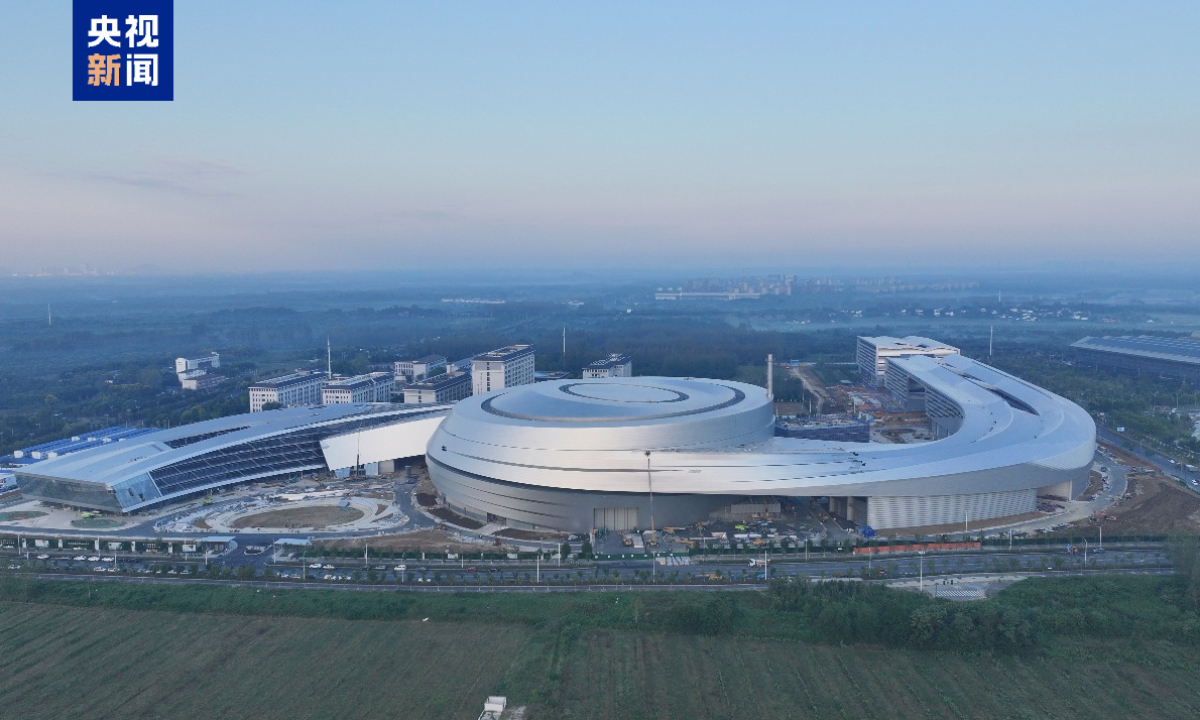
China's 'artificial sun' hits new milestone with research campus delivered for use, targets 2030 for first electricity output
-
This post did not contain any content.
-
This post did not contain any content.
Electrical power generation from fusion will be orders of magnitude more expensive that from fission, and will be even more material intensive.
-
Electrical power generation from fusion will be orders of magnitude more expensive that from fission, and will be even more material intensive.
No risk of a meltdown, doesn't produce nuclear waste, doesn't need uranium as fuel. Also produces helium securing the balloons for future generations.
-
No risk of a meltdown, doesn't produce nuclear waste, doesn't need uranium as fuel. Also produces helium securing the balloons for future generations.
In principle this is correct, but the plant itself is becoming nuclear waste. Not saying this is a deal breaker, just something to keep in mind
-
No risk of a meltdown, doesn't produce nuclear waste, doesn't need uranium as fuel. Also produces helium securing the balloons for future generations.
Fuel wont be the expensive part. Materials engineering constraints will mean most of the heat sink will need replacing with essentially bespoke parts on a regular basis. No other energy source puts materials under the same trauma as fusion does.
-
Fuel wont be the expensive part. Materials engineering constraints will mean most of the heat sink will need replacing with essentially bespoke parts on a regular basis. No other energy source puts materials under the same trauma as fusion does.
No other energy source puts materials under the same trauma
I'm sure people said the same thing the first time we thought about turning a piston with literal explosions.
The engineering challenges are immense, but these challenges shouldn't be an excuse we use to prop up inferior, dirtier power generation.
-
No risk of a meltdown, doesn't produce nuclear waste, doesn't need uranium as fuel. Also produces helium securing the balloons for future generations.
No risk of a meltdown, yes, but diamond encrusted platinum infrastructure. Doesn't produce nuclear waste, no: high neutron flux on the inner wall will activate materials, and limit lifetime. Doesn't need uranium, needs to breed tritium (plus excess) literally by the ton, in the lithium blanket. Helium, what, have you smoked waccy tobaccy today?
-
No other energy source puts materials under the same trauma
I'm sure people said the same thing the first time we thought about turning a piston with literal explosions.
The engineering challenges are immense, but these challenges shouldn't be an excuse we use to prop up inferior, dirtier power generation.
We didn't really, steel is a phenomenal material at retaining strength at high temperatures with minimal long-cycle damage and was well industrially established at the time.
The issue with fusion and especially tokamaks is the triple challenge of mechanical loads + radiation loads + high heat flux. There's really no material known to mankind which can maintain the necessary high-temperature strength, while moving enough heat out of the reactor to keep it economical, without critically degrading in a matter of weeks/months due to fast neutron irradiation (let alone decades, as is standard for nearly every other thermal energy source). Hence, the heat sink will need to be replaced regularly.
Add to that the fact that fusion companies are essentially giant bubbles of debt owed to venture capital currently and you don't have a formula for a successful and cheap energy source.
But anyway, we already have fusion energy and it was probably partly used to charge your phone! It comes from the big floating fusion reactor in the sky, only requires a few panels of silicon, and is the cheapest and greenest energy source in existence.
-
No risk of a meltdown, yes, but diamond encrusted platinum infrastructure. Doesn't produce nuclear waste, no: high neutron flux on the inner wall will activate materials, and limit lifetime. Doesn't need uranium, needs to breed tritium (plus excess) literally by the ton, in the lithium blanket. Helium, what, have you smoked waccy tobaccy today?
Yes you've provided a list of engineering challenges that everyone is aware of. It doesn't change the potential.
Helium, what, have you smoked waccy tobaccy today?
It was a joke, but fusion technically produces helium even if it also consumes it for cooling.
https://nomad-laboratory.de/uploads/publications/th/Fusion-Helium_supply_20131213.pdf
In the case of the HCLL reactor with lead as multiplier,
various Pb isotopes are produced in the (n, 2n) reaction
[26], and there is no α-particle emission. The amount of
helium produced annually remains at 0.39 t.Fission reactors need to use helium as a coolant too though if they're high temperature (like gas reactors) and they don't produce shit except waste.
-
Yes you've provided a list of engineering challenges that everyone is aware of. It doesn't change the potential.
Helium, what, have you smoked waccy tobaccy today?
It was a joke, but fusion technically produces helium even if it also consumes it for cooling.
https://nomad-laboratory.de/uploads/publications/th/Fusion-Helium_supply_20131213.pdf
In the case of the HCLL reactor with lead as multiplier,
various Pb isotopes are produced in the (n, 2n) reaction
[26], and there is no α-particle emission. The amount of
helium produced annually remains at 0.39 t.Fission reactors need to use helium as a coolant too though if they're high temperature (like gas reactors) and they don't produce shit except waste.
Here's a thing about potential: you can only be certain of it after you've solved these "engineering challenges". Does tritium breeding factor, EROEI and material footprint (all mined, transported and processed using fossil fuels) mean a thing to you? These factors are not specific to fusion, but they're the most challenging for fusion reactors of currently known designs.
-
Here's a thing about potential: you can only be certain of it after you've solved these "engineering challenges". Does tritium breeding factor, EROEI and material footprint (all mined, transported and processed using fossil fuels) mean a thing to you? These factors are not specific to fusion, but they're the most challenging for fusion reactors of currently known designs.
You're right, but simultaneously your rhetoric is completely defeatist before we've even identified what can be solved. We won't know the potential until it's solved but you also can't be sure of the cost.
-
We didn't really, steel is a phenomenal material at retaining strength at high temperatures with minimal long-cycle damage and was well industrially established at the time.
The issue with fusion and especially tokamaks is the triple challenge of mechanical loads + radiation loads + high heat flux. There's really no material known to mankind which can maintain the necessary high-temperature strength, while moving enough heat out of the reactor to keep it economical, without critically degrading in a matter of weeks/months due to fast neutron irradiation (let alone decades, as is standard for nearly every other thermal energy source). Hence, the heat sink will need to be replaced regularly.
Add to that the fact that fusion companies are essentially giant bubbles of debt owed to venture capital currently and you don't have a formula for a successful and cheap energy source.
But anyway, we already have fusion energy and it was probably partly used to charge your phone! It comes from the big floating fusion reactor in the sky, only requires a few panels of silicon, and is the cheapest and greenest energy source in existence.
I love solar, but we can't pretend it's without its own challenges.
A utility scale solar installation comparable to an average fission plant would take 15 square kilometers. Not to mention how complicated the infrastructure to actually transmit that power is.
Space is only one challenge though. You have no energy production at night, and energy generation can drop by half to almost three quarters during winter at higher latitudes.
fusion companies are essentially giant bubbles of debt owed to venture capital currently
There's a couple of loud, commercial fusion companies sucking up VC money, but all the serious projects are nationalized (China) or are projects run by public institutes with government funding (EU).
-
I love solar, but we can't pretend it's without its own challenges.
A utility scale solar installation comparable to an average fission plant would take 15 square kilometers. Not to mention how complicated the infrastructure to actually transmit that power is.
Space is only one challenge though. You have no energy production at night, and energy generation can drop by half to almost three quarters during winter at higher latitudes.
fusion companies are essentially giant bubbles of debt owed to venture capital currently
There's a couple of loud, commercial fusion companies sucking up VC money, but all the serious projects are nationalized (China) or are projects run by public institutes with government funding (EU).
Agreed, a 100% solar grid is unrealistic. A healthy mix of nuclear and reneweables is the way forward imo.
-
I love solar, but we can't pretend it's without its own challenges.
A utility scale solar installation comparable to an average fission plant would take 15 square kilometers. Not to mention how complicated the infrastructure to actually transmit that power is.
Space is only one challenge though. You have no energy production at night, and energy generation can drop by half to almost three quarters during winter at higher latitudes.
fusion companies are essentially giant bubbles of debt owed to venture capital currently
There's a couple of loud, commercial fusion companies sucking up VC money, but all the serious projects are nationalized (China) or are projects run by public institutes with government funding (EU).
It's called energy storage technology.
-
It's called energy storage technology.
So then you need 15km² to cover the day, another 5-10km² to cover the night, and then however much space and lithium it's going to take to store all that energy.
And this still doesn't solve the problem once you're a little too far off the equator.
-
No risk of a meltdown, doesn't produce nuclear waste, doesn't need uranium as fuel. Also produces helium securing the balloons for future generations.
It does produce nuclear waste...
Just beacause the fuel isn't radioactive doesn't mean the whole reactor becomes nuclear waste since it's constantly bombarded with radiation.
I don't know why this marketing lie is always presented as fact.
-
Electrical power generation from fusion will be orders of magnitude more expensive that from fission, and will be even more material intensive.
Imagine thinking that all the scientists and engineers in China just haven't considered these basic things before embarking on a huge megaproject.
-
Imagine thinking that all the scientists and engineers in China just haven't considered these basic things before embarking on a huge megaproject.
It's neat science and tech and a nice paycheck. So enough motivation. Few people are aware that our high technology civilisation has an expiration date, so let them party while they still can.
-
It's neat science and tech and a nice paycheck. So enough motivation. Few people are aware that our high technology civilisation has an expiration date, so let them party while they still can.
I absolutely love how you think you know more than everyone else. Enjoy living in your doomer cult.
-
You're right, but simultaneously your rhetoric is completely defeatist before we've even identified what can be solved. We won't know the potential until it's solved but you also can't be sure of the cost.
Collapse is called a predicament rather than merely a problem, precisely because it is a tangled complex of problems that has no solution. See https://escholarship.org/uc/energy_ambitions for why it is so. Or, rather, don't, since if you get it, all you get is a massive depression for your pains.
Notice that we're also running out of time, so things feasible in principle are not reachable in the time window still at our disposal. The next 2-3 decades should make that clearer.





Ciao! Sembra che tu sia interessato a questa conversazione, ma non hai ancora un account.
Stanco di dover scorrere gli stessi post a ogni visita? Quando registri un account, tornerai sempre esattamente dove eri rimasto e potrai scegliere di essere avvisato delle nuove risposte (tramite email o notifica push). Potrai anche salvare segnalibri e votare i post per mostrare il tuo apprezzamento agli altri membri della comunità.
Con il tuo contributo, questo post potrebbe essere ancora migliore 💗
Registrati Accedi





 Citiverse è un progetto che si basa su NodeBB ed è federato! | Categorie federate | Chat | 📱 Installa web app o APK | 🧡 Donazioni | Privacy Policy