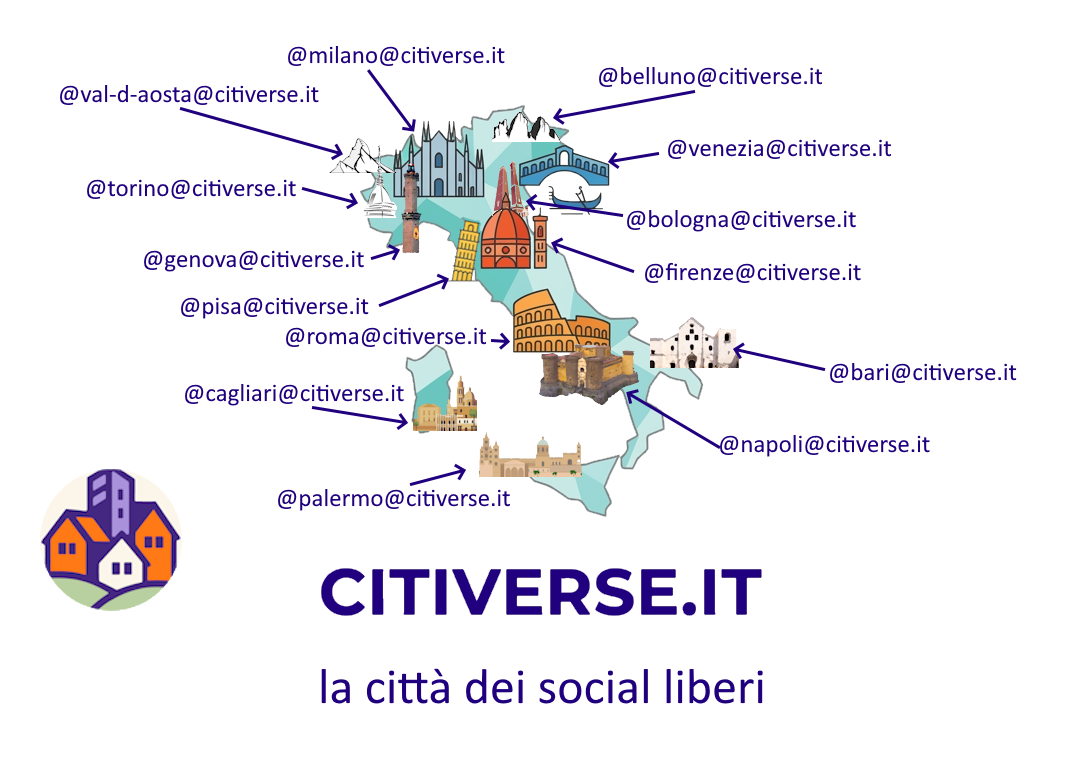
Citiverse è uno spazio aperto a tutte le comunità. Se vuoi aprire un gruppo locale o una sezione per la tua organizzazione, puoi contattare gli amministratori: pagina dei contatti.
TIL the fediverse basically DDOS's sites when you share a link.
-
Random numbers exist.
wait 3 //randomlydecidedby fair dice roll
-
I shared a link from NPR Tiny Desk but there was no image preview or video embed. After investigating this I learned that when you do that, each instance picks up the link and individually retrieves the link preview nearly simultaneously. For gargantuan sites like YT or Reddit, this is a trivial amount of traffic and not a problem, but for smaller sites like NPR this results in a sort of botnet DDOS attack on the site's servers. More here. Another example here . For that reason, NPR has blocked Fediverse servers like Mastodon.
I have experienced this on my personal server as well (DDOS), but at the time didn't know why, exactly.
This isn't the end of the world, but certainly is not great and hurts engagement with the content. Is there a solution for this? Perhaps using some sort of webtorrent service like PeerTube where they just fetch the information from another fediverse server instead of the source server? Maybe fetching embeds client-side? At least that would stagger the requests.
E: Many people have replied comparing this to the Reddit "hug of death" or "The Slashdot effect". This is not the same at all. Those are legitimate site visits from humans that happen over the course of several hours. This is the result of several thousand servers all automatically fetching the same image simultaneously , and without any human involvement, and potentially next to zero human traffic to the site, which is why I compared it to a botnet or DDOS attack.
This probably why my place of work blocked it behind the firewall
-
This probably why my place of work blocked it behind the firewall
This was my first thought too.
-
I'm a fan of the second one. My thought is, if you trust a server enough to accept messages from it, then you should also trust it enough to let it scrape the page title, article image, etc. for you, too.
Seems like a no-brainer! They could even leave the old behavior as an option for instance admins to re-enable, but if they default it to not DDoSing, that would make a huge difference.
-
This probably why my place of work blocked it behind the firewall
Do they block the useragent or the URL? NPR apparently blocks the former.
-
No one said anything about random.
"Random back off" is the name of a technique to avoid this exact problem.
Each instance generates a random number of (say) seconds between (say 15 to 120) and schedules the fetch for then. It is extremely unlikely that any two instances select the same second.
-
"Random back off" is the name of a technique to avoid this exact problem.
Each instance generates a random number of (say) seconds between (say 15 to 120) and schedules the fetch for then. It is extremely unlikely that any two instances select the same second.
Yes I understand. I just don't appreciate the demeaning tone this information was delivered in.
-
That second solution is what I thought of as doing as I read this. It doesn’t rely on a third party service being up. And that instance has to do that work anyway. So why not just share the results with others?
It was my first thought too but there are downsides to it. Trust is a small one given the nature of the system but compute and bandwidth costs could be an issue also, especially for larger instances.
The first solution is more fragile but could be CDN'd and those are cheap.
-
I shared a link from NPR Tiny Desk but there was no image preview or video embed. After investigating this I learned that when you do that, each instance picks up the link and individually retrieves the link preview nearly simultaneously. For gargantuan sites like YT or Reddit, this is a trivial amount of traffic and not a problem, but for smaller sites like NPR this results in a sort of botnet DDOS attack on the site's servers. More here. Another example here . For that reason, NPR has blocked Fediverse servers like Mastodon.
I have experienced this on my personal server as well (DDOS), but at the time didn't know why, exactly.
This isn't the end of the world, but certainly is not great and hurts engagement with the content. Is there a solution for this? Perhaps using some sort of webtorrent service like PeerTube where they just fetch the information from another fediverse server instead of the source server? Maybe fetching embeds client-side? At least that would stagger the requests.
E: Many people have replied comparing this to the Reddit "hug of death" or "The Slashdot effect". This is not the same at all. Those are legitimate site visits from humans that happen over the course of several hours. This is the result of several thousand servers all automatically fetching the same image simultaneously , and without any human involvement, and potentially next to zero human traffic to the site, which is why I compared it to a botnet or DDOS attack.
I remember reading the same thing about reddit, slashdot, fark, and other sites. But I like the FASP idea as a way to relieve this.
-
I shared a link from NPR Tiny Desk but there was no image preview or video embed. After investigating this I learned that when you do that, each instance picks up the link and individually retrieves the link preview nearly simultaneously. For gargantuan sites like YT or Reddit, this is a trivial amount of traffic and not a problem, but for smaller sites like NPR this results in a sort of botnet DDOS attack on the site's servers. More here. Another example here . For that reason, NPR has blocked Fediverse servers like Mastodon.
I have experienced this on my personal server as well (DDOS), but at the time didn't know why, exactly.
This isn't the end of the world, but certainly is not great and hurts engagement with the content. Is there a solution for this? Perhaps using some sort of webtorrent service like PeerTube where they just fetch the information from another fediverse server instead of the source server? Maybe fetching embeds client-side? At least that would stagger the requests.
E: Many people have replied comparing this to the Reddit "hug of death" or "The Slashdot effect". This is not the same at all. Those are legitimate site visits from humans that happen over the course of several hours. This is the result of several thousand servers all automatically fetching the same image simultaneously , and without any human involvement, and potentially next to zero human traffic to the site, which is why I compared it to a botnet or DDOS attack.
Randomly stagger the times of each instance's request.
+1-300 seconds
-
No one said anything about random.
Nobody said the delay had to be fixed instead of random either…
-
I remember reading the same thing about reddit, slashdot, fark, and other sites. But I like the FASP idea as a way to relieve this.
Why is that? Those are centralized platforms, they should only need to retrieve the preview once each?
-
I shared a link from NPR Tiny Desk but there was no image preview or video embed. After investigating this I learned that when you do that, each instance picks up the link and individually retrieves the link preview nearly simultaneously. For gargantuan sites like YT or Reddit, this is a trivial amount of traffic and not a problem, but for smaller sites like NPR this results in a sort of botnet DDOS attack on the site's servers. More here. Another example here . For that reason, NPR has blocked Fediverse servers like Mastodon.
I have experienced this on my personal server as well (DDOS), but at the time didn't know why, exactly.
This isn't the end of the world, but certainly is not great and hurts engagement with the content. Is there a solution for this? Perhaps using some sort of webtorrent service like PeerTube where they just fetch the information from another fediverse server instead of the source server? Maybe fetching embeds client-side? At least that would stagger the requests.
E: Many people have replied comparing this to the Reddit "hug of death" or "The Slashdot effect". This is not the same at all. Those are legitimate site visits from humans that happen over the course of several hours. This is the result of several thousand servers all automatically fetching the same image simultaneously , and without any human involvement, and potentially next to zero human traffic to the site, which is why I compared it to a botnet or DDOS attack.
I mean, just how many instances are gonna ping the URL? Several hundred, low thousands at worst?
Unless it happens to be some very large media content or a dynamic page with no caching, I'd think the automated federation hits shouldn't be too bad.
The influx of users that might come after a viral post though, that's rough....
-
Randomly stagger the times of each instance's request.
+1-300 seconds
That's basically what's now implemented, iirc. At least in masto
-
Nobody said the delay had to be fixed instead of random either…
Yes that's the problem...?
-
how would you know the results havent been tampered with?
So I receive a post from someone presumably with some comment, along with a preview of a link, and I'm supposed to trust one but not the other ?
-
I shared a link from NPR Tiny Desk but there was no image preview or video embed. After investigating this I learned that when you do that, each instance picks up the link and individually retrieves the link preview nearly simultaneously. For gargantuan sites like YT or Reddit, this is a trivial amount of traffic and not a problem, but for smaller sites like NPR this results in a sort of botnet DDOS attack on the site's servers. More here. Another example here . For that reason, NPR has blocked Fediverse servers like Mastodon.
I have experienced this on my personal server as well (DDOS), but at the time didn't know why, exactly.
This isn't the end of the world, but certainly is not great and hurts engagement with the content. Is there a solution for this? Perhaps using some sort of webtorrent service like PeerTube where they just fetch the information from another fediverse server instead of the source server? Maybe fetching embeds client-side? At least that would stagger the requests.
E: Many people have replied comparing this to the Reddit "hug of death" or "The Slashdot effect". This is not the same at all. Those are legitimate site visits from humans that happen over the course of several hours. This is the result of several thousand servers all automatically fetching the same image simultaneously , and without any human involvement, and potentially next to zero human traffic to the site, which is why I compared it to a botnet or DDOS attack.
I don't really get it. The image is federated, there's no need for instances to refetch it. Just checked out some posts and indeed it's there, in the
imageproperty. With the URL pointing to the Lemmy instance.So if this is actually an issue, that's just bad programming and needs to be fixed.
Edit: didn't notice OP uses Piefed. Unlike Lemmy and Mbin, it seems like Piefed doesn't federate it.Edit: actually I'm blind, Piefed does federate it too, sorry piefed
-
Why is that? Those are centralized platforms, they should only need to retrieve the preview once each?
https://en.wikipedia.org/wiki/Slashdot_effect but people were going in, looking at the link, sometimes overwhelming the server
-
I shared a link from NPR Tiny Desk but there was no image preview or video embed. After investigating this I learned that when you do that, each instance picks up the link and individually retrieves the link preview nearly simultaneously. For gargantuan sites like YT or Reddit, this is a trivial amount of traffic and not a problem, but for smaller sites like NPR this results in a sort of botnet DDOS attack on the site's servers. More here. Another example here . For that reason, NPR has blocked Fediverse servers like Mastodon.
I have experienced this on my personal server as well (DDOS), but at the time didn't know why, exactly.
This isn't the end of the world, but certainly is not great and hurts engagement with the content. Is there a solution for this? Perhaps using some sort of webtorrent service like PeerTube where they just fetch the information from another fediverse server instead of the source server? Maybe fetching embeds client-side? At least that would stagger the requests.
E: Many people have replied comparing this to the Reddit "hug of death" or "The Slashdot effect". This is not the same at all. Those are legitimate site visits from humans that happen over the course of several hours. This is the result of several thousand servers all automatically fetching the same image simultaneously , and without any human involvement, and potentially next to zero human traffic to the site, which is why I compared it to a botnet or DDOS attack.
Also https:// itsfoss.com/news/mastodon-link-problem/
-
There are two proposed solutions I have seen. I do not claim that this is exhaustive, just only limited to the proposals that I have stumbled across.
FASP - Fediverse Auxiliary Service Provider
The idea that mastodon has is to have a third-party service that does something like generate a link preview once and then share that to fediverse instances that need it. They have a whole spec they wrote up about these kinds of services that can be run to help out fediverse instances with different things like this, search, or discoverability. They call these FASPs - the repo with the spec is here.
I don't yet know of any FASP that is live and running, so it is kind of a paper spec at the moment. I don't do too much on the microblogging side of the fediverse though, so I very well could be wrong.
Federate link metadata and the post at the same time
This comes from an issue on PieFed's repo. It is basically just an idea at this point, but it is a pretty basic one; have the originating instance fetch the link preview information and simply federate it out alongside the post itself.
Really the only metadata we are interested in is the thumbnail image url. Afaik PieFed already retrieves this from the og:image meta tag before sending the URL along with the other post content to the instance hosting the community.
Another idea - those meta tags are also retrieved during post composition in an ajax call, in order to prepopulate the title and body fields so the image url could be stashed in a hidden field at that point...










Ciao! Sembra che tu sia interessato a questa conversazione, ma non hai ancora un account.
Stanco di dover scorrere gli stessi post a ogni visita? Quando registri un account, tornerai sempre esattamente dove eri rimasto e potrai scegliere di essere avvisato delle nuove risposte (tramite email o notifica push). Potrai anche salvare segnalibri e votare i post per mostrare il tuo apprezzamento agli altri membri della comunità.
Con il tuo contributo, questo post potrebbe essere ancora migliore 💗
Registrati Accedi










 Citiverse è un progetto che si basa su NodeBB ed è federato! | Categorie federate | Chat | 📱 Installa web app o APK | 🧡 Donazioni | Privacy Policy