
Citiverse è uno spazio aperto a tutte le comunità. Se vuoi aprire un gruppo locale o una sezione per la tua organizzazione, puoi contattare gli amministratori: pagina dei contatti.
Why do we keep bringing this up?
-
If we want a better web, we have to stop pretending this is just about “bad tech companies doing bad things.” Of course, they are-that’s what capitalist incentives produce. The real question is: what are we doing differently?
That means accepting some uncomfortable truths. The better path will be less convenient, at least at first. We will have to socially support things that used to look free on the #dotcons. Because the cost we didn’t want to face is simple: the #openweb was always going to be harder, someone has to:
- run the servers
- maintain the software
- fund development
- handle abuse, moderation, and #UX
The fantasy wasn’t that this work didn’t exist. The fantasy was that the market – advertising – would cover it without consequences.
In the current mess in tech paths, this becomes visible again. Bluesky and #ATproto keep getting lumped in with #ActivityPub under the easy label of “open protocols, yay”… but that’s just not true. Yes, they both sit in the #openweb space, but there’s a real structural problem here, and we’re seeing it play out in real time.
At AtmosphereConf, the signal was stark:
“Why would anyone fund an Atmosphere project if Bluesky, with $100 million in the bank, might ship a competing feature at any moment?”
That’s not an ecosystem. That’s a platform with enough gravity to crush its own edges. And people are noticing. The old pattern is back:
- invite the community in
- let them build the value
- then absorb and replace them
Same playbook, again and again. It feels open – but the centre still holds the power. The same dynamic we saw with Twitter. The DNA is obvious.
The difference really matters. #ActivityPub was built as a commons path from the start – messy, flawed, but natively open. #ATproto is something else: a platform-first model with openness layered on top. That’s why it keeps drifting this way. It’s not a bug, it’s the design.
Too much #techshit, and everything starts to stink. Why would anyone step into the #openweb if that’s the smell? This creates a bigger problem, that it’s a mess that keeps coming back, and as usual we’ll be the ones left to compost it, underfunded, unrecorded, and unthanked.
We’ve been here before – with the #encryptionists and the #blockchain mess. Big promises, lots of noise, overlapping hype cycles. Now there’s a clear overlap with #Bluesky and #AI. The risk isn’t just that this fails. It’s that when it fails, it leaves a miasma behind, making it harder for people to trust the actually working open paths. That’s the real damage.
Neglect is not innocence, this isn’t about blaming users instead of power. Power matters. Monopolies matter. Venture capital mess matters. But still, if the #openweb mattered, why didn’t we support it?
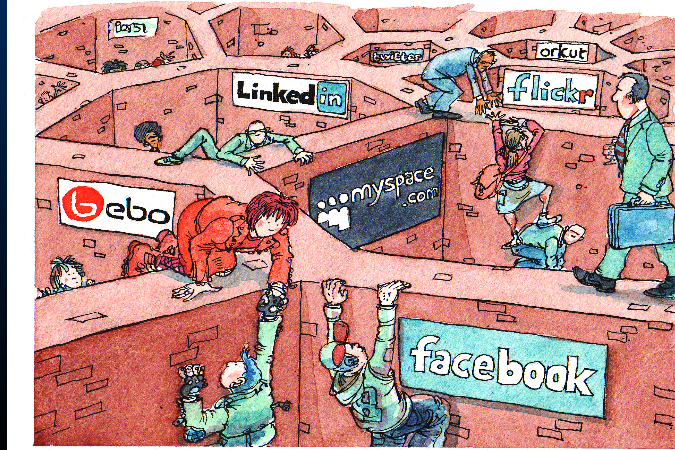
Why do people pay for streaming, cloud, and delivery, but not support publishing tools, independent media, hosting, or open infrastructure?
Why did so many #NGO organisations that talked about openness still push people onto closed platforms the moment growth and analytics are on the table? We keep choosing short-term convenience over long-term stewardship, not just a market failure, a cultural one.
So lets look at this mess again. I’ve been trying to find a way to express my view of the people who took over outreach in the #Fediverse, and in doing so helped shape the current #openweb reboot.
DRAFT: naïve, controlling, and self-interested.
They’ve left a mess that the people they pushed aside now have to compost. It’s really useful to look at how we got here.
In the early years, outreach was organised by a genuinely diverse, native crew. It was a good time – three open conferences, and even getting the EU to adopt the standard. But that group burned out, focus splintered, self-interest crept in, driven by the need to control resources. The balance shifted, and grifters gradually outnumbered them, eventually tearing it apart. In the space left behind, a new crew stepped in – filling the vacuum with centralised power and influence. And that’s where we are today.
We don’t fix this by arguing harder. We fix it by building – and holding – open spaces that don’t follow this pattern.
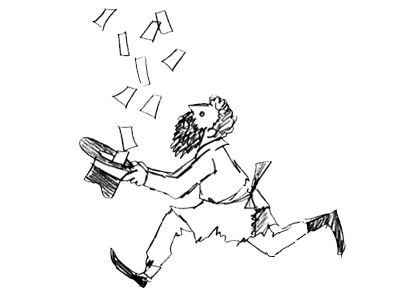
It’s not about features. It’s about culture.
#ActivityPub comes out of the #openweb tradition.
#Bluesky comes out of a split lineage – #openweb roots, shaped by #dotcons incentives, with an #encryptionist upbringing.
-
If we want a better web, we have to stop pretending this is just about “bad tech companies doing bad things.” Of course, they are-that’s what capitalist incentives produce. The real question is: what are we doing differently?
That means accepting some uncomfortable truths. The better path will be less convenient, at least at first. We will have to socially support things that used to look free on the #dotcons. Because the cost we didn’t want to face is simple: the #openweb was always going to be harder, someone has to:
- run the servers
- maintain the software
- fund development
- handle abuse, moderation, and #UX
The fantasy wasn’t that this work didn’t exist. The fantasy was that the market – advertising – would cover it without consequences.
In the current mess in tech paths, this becomes visible again. Bluesky and #ATproto keep getting lumped in with #ActivityPub under the easy label of “open protocols, yay”… but that’s just not true. Yes, they both sit in the #openweb space, but there’s a real structural problem here, and we’re seeing it play out in real time.
At AtmosphereConf, the signal was stark:
“Why would anyone fund an Atmosphere project if Bluesky, with $100 million in the bank, might ship a competing feature at any moment?”
That’s not an ecosystem. That’s a platform with enough gravity to crush its own edges. And people are noticing. The old pattern is back:
- invite the community in
- let them build the value
- then absorb and replace them
Same playbook, again and again. It feels open – but the centre still holds the power. The same dynamic we saw with Twitter. The DNA is obvious.
The difference really matters. #ActivityPub was built as a commons path from the start – messy, flawed, but natively open. #ATproto is something else: a platform-first model with openness layered on top. That’s why it keeps drifting this way. It’s not a bug, it’s the design.
Too much #techshit, and everything starts to stink. Why would anyone step into the #openweb if that’s the smell? This creates a bigger problem, that it’s a mess that keeps coming back, and as usual we’ll be the ones left to compost it, underfunded, unrecorded, and unthanked.
We’ve been here before – with the #encryptionists and the #blockchain mess. Big promises, lots of noise, overlapping hype cycles. Now there’s a clear overlap with #Bluesky and #AI. The risk isn’t just that this fails. It’s that when it fails, it leaves a miasma behind, making it harder for people to trust the actually working open paths. That’s the real damage.
Neglect is not innocence, this isn’t about blaming users instead of power. Power matters. Monopolies matter. Venture capital mess matters. But still, if the #openweb mattered, why didn’t we support it?
Why do people pay for streaming, cloud, and delivery, but not support publishing tools, independent media, hosting, or open infrastructure?
Why did so many #NGO organisations that talked about openness still push people onto closed platforms the moment growth and analytics are on the table? We keep choosing short-term convenience over long-term stewardship, not just a market failure, a cultural one.
So lets look at this mess again. I’ve been trying to find a way to express my view of the people who took over outreach in the #Fediverse, and in doing so helped shape the current #openweb reboot.
DRAFT: naïve, controlling, and self-interested.
They’ve left a mess that the people they pushed aside now have to compost. It’s really useful to look at how we got here.
In the early years, outreach was organised by a genuinely diverse, native crew. It was a good time – three open conferences, and even getting the EU to adopt the standard. But that group burned out, focus splintered, self-interest crept in, driven by the need to control resources. The balance shifted, and grifters gradually outnumbered them, eventually tearing it apart. In the space left behind, a new crew stepped in – filling the vacuum with centralised power and influence. And that’s where we are today.
We don’t fix this by arguing harder. We fix it by building – and holding – open spaces that don’t follow this pattern.
It’s not about features. It’s about culture.
#ActivityPub comes out of the #openweb tradition.
#Bluesky comes out of a split lineage – #openweb roots, shaped by #dotcons incentives, with an #encryptionist upbringing.
Very well said. Couldn't agree more. A wolf in sheep's clothing. A patina of 'open systems' over a solid $100M corporate core.




Ciao! Sembra che tu sia interessato a questa conversazione, ma non hai ancora un account.
Stanco di dover scorrere gli stessi post a ogni visita? Quando registri un account, tornerai sempre esattamente dove eri rimasto e potrai scegliere di essere avvisato delle nuove risposte (tramite email o notifica push). Potrai anche salvare segnalibri e votare i post per mostrare il tuo apprezzamento agli altri membri della comunità.
Con il tuo contributo, questo post potrebbe essere ancora migliore 💗
Registrati Accedi













 Citiverse è un progetto che si basa su NodeBB ed è federato! | Categorie federate | Chat | 📱 Installa web app o APK | 🧡 Donazioni | Privacy Policy