Citiverse
  • I'm a software developer working on a bunch of #Fediverse things: #Emissary, #Bandwagon, and bandwagon.fm - with several more in the pipeline.


    benpate@mastodon.socialB
    61
    0

    I'm a software developer working on a bunch of things: , , and bandwagon.fm - with several more in the pipeline.

    It's a pretty strange mix that doesn't really fit today's Fediverse, but it makes sense when you see the end goal.

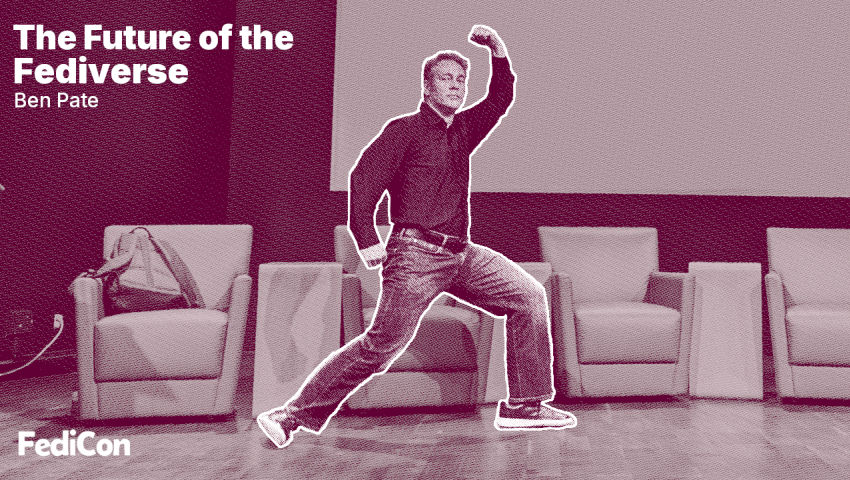
    I got an opportunity at to explain myself, so here it is:

    It's not the greatest talk about Fediverse tech, but it's the best I've got so far, and I hope it inspires you to make great things here with me.

  • jasperb@mastodon.socialJ
    2
    0

    @benpate What I liked about early social media, was the ability on facebook to create groups, chats, events etc. Back then I was into climate- & human rights activism. Via FB I met people, I wouldn't have met otherwise, those things were not just staying on the platform. It actually changed my life. We organized IRL-events, protests... I'd like to see more of that in the fediverse features like events, groups, moderation, different roles, permissions etc. complemented by secure communication!

  • jupiter_rowland@hub.netzgemeinde.euJ
    15
    0
    @Jasper Burns
    I'd like to see more of that in the fediverse features like events, groups, moderation, different roles, permissions etc. complemented by secure communication!

    The Fediverse has literally got just about of this right now. Mastodon doesn't. But the Fediverse does because there's stuff in the Fediverse, as in federated with Mastodon, that has it. And it has had all of this for longer than Mastodon has even existed.

    Friendica


    Friendica has
    • federating events
    • groups (which are special accounts)
    • private groups
    • hidden groups
    • moderated groups
    • groups with multiple moderators on the same server
    • a permissions system
    • DMs that are actually private because they're covered by the permissions system rather than just handling who receives a message
    • etc.

    Friendica is from May, 2010, over five and a half years older than Mastodon.

    It was made as an alternative for Facebook right away. It was not meant to be a Facebook clone, though, but better than Facebook while also covering all long-form blogging features.

    And Friendica is fully federated with Mastodon. You can follow Friendica accounts from Mastodon, and Friendica users can connect to your Mastodon account from Friendica.

    Hubzilla


    Hubzilla has
    • federating events (in addition to a non-federating CalDAV calendar server)
    • groups (which are special channels; Hubzilla calls them "forums")
    • various independent options of making groups private that can be combined
    • hidden groups, groups with multiple admins/moderators anywhere on Hubzilla or (streams) or Forte
    • the second-most advanced permissions system in the Fediverse on three levels (entire channel, individual contacts, content) with 17 different permissions and seven or eight channel-wide permission levels for each
    • DMs that are actually private because they're covered by the permissions system rather than just handling who receives a message
    • optional additional encryption (only works within Hubzilla)
    • optional non-federating articles
    • optional planning cards
    • optional webpages
    • optional wikis
    • nomadic (fully portable, decentralised, distributed) identity
    • etc. etc.

    Hubzilla is from March, 2016, ten months older than Mastodon. It was created by Friendica's creator by rebuilding and repurposing a fork of a fork of Friendica.

    It is considered a "decentralised social content management system" that can be just about anything you want it to be because it's so modular. Basically, what's incomplete and unstable at best and an unfulfilled promise at worst on Bonfire has been readily available and rock-solid stable for over 10 years on Hubzilla. And even more on top of that.

    Red, the Hubzilla precursor, was the first software to establish nomadic identity, something that Bluesky claims to be in the process of inventing from scratch. And that was as early as 2012.

    Hubzilla was the very first software to implement ActivityPub. And unlike Mastodon, Hubzilla implemented ActivityPub by the book and largely still does so.

    And Hubzilla is optionally fully federated with Mastodon. In fact, this comment that you're reading right now comes from Hubzilla. Like, you're directly speaking with someone on something that has absolutely everything you wish for the Fediverse to have, and that has had all of it for longer than Mastodon has existed.

    (streams), Forte


    (streams) and Forte have
    • federating events (in addition to a non-federating CalDAV calendar server)
    • groups (which are special channels)
    • private groups
    • hidden groups
    • groups with multiple admins/moderators anywhere on Hubzilla or (streams) or Forte
    • groups with moderated posting and commenting (as in posts and comments from new members will have to be confirmed by the moderators in order to be visible)
    • the most advanced permissions system in the Fediverse on three levels (entire channel, individual contacts, content) with 15 different permissions and three or four channel-wide permission levels for each
    • DMs that are actually private because they're covered by the permissions system rather than just handling who receives a message
    • nomadic (fully portable, decentralised, distributed) identity
    • etc.

    (streams) is from October, 2021. It was created by Friendica's creator as a fork of a fork of three forks of a fork (of a fork?) of Hubzilla.

    Forte is from August, 2024. It was created by Friendica's creator as a fork of (streams).

    Forte was the first software to establish nomadic identity via ActivityPub.

    And both are fully federated with Mastodon; (streams) optionally so, but it is by default.

    I've made a document with a series of tables which directly compare the features of Mastodon, Friendica, Hubzilla, (streams) and Forte:

    https://hub.netzgemeinde.eu/item/0a75de76-eb27-4149-b708-f20b2f79d392

    In fact, this document is on the very same Hubzilla channel that I'm commenting from right now.

    #Long #LongPost #CWLong #CWLongPost #FediMeta #FediverseMeta #CWFediMeta #CWFediverseMeta #Fediverse #NotOnlyMastodon #FediverseIsNotMastodon #MastodonIsNotTheFediverse #Friendica #Hubzilla #Streams #(streams) #Forte #Calendar #Events #Groups #FediGroups #FediverseGroups #PrivateGroups #Permission #Permissions
  • jasperb@mastodon.socialJ
    2
    0

    @jupiter_rowland sry I deleted my message cause I thought it’s off topic. i kind of knew that, but I also don’t know how it really works, and if for an example events are visible to all Fediverse users or only the few that use a particular plattform or feature that supports it. The thing is, I have never seen it. I am a simple user, for me those features have to present themselves, before I make an effort to get them, or change the plattform.

  • jupiter_rowland@hub.netzgemeinde.euJ
    15
    0
    @Jasper Burns Okay, I guess here's some explanation necessary from a Mastodon point of view.

    Groups, part 1: Membership


    As for a Friendica group, you can think of it as a Mastodon account, but with a little twist. In order to join that group, you follow it. And if you have your own group, you have one Mastodon account that's your personal account and another Mastodon account that's the group.

    However, Friendica is not a Twitter clone. It's a Facebook replacement, and it has been one long before cloning Twitter was considered the one thing the Fediverse does.

    Now, Twitter has followers and followed. As does Mastodon because Mastodon is a Twitter clone.

    But Facebook doesn't have followers and followed. It has "friends" which in Twitterspeak and Mastospeak are mutual followers. Thus, it's the same on Friendica.

    Friendica doesn't have followers and followed as two fully separate things and mutuals as the state when you follow someone and they follow you back. It has connections which are always mutual.

    So in order to really join a Friendica group, you must connect to it (Mastodon: follow it), and the group account must confirm the connection (Mastodon: follow you back).

    It's basically the same on Hubzilla, (streams) and Forte. Only that on these three, much unlike on Mastodon and Friendica, the account, the login and the identity are not tied together into one thing. Imagine you could have as many Mastodon-accounts-as-in-identities on one Mastodon-account-as-in-login. Imagine you could switch back and forth between fully independent identities on the same server without having to log out and back in again. Only that Hubzilla, (streams) and Forte refer to a Mastodon-account-as-in-identity as a "channel" and to a Mastodon-account-as-in-login as an "account".

    This means that on Hubzilla, (streams) and Forte, a group (Hubzilla: forum) is a channel with special settings. As a group owner, you have one account/login, and on that one account/login, you have your personal channel, and you have your group/forum channel, and you can switch between them while staying logged in.

    (1/9)

    #Long #LongPost #CWLong #CWLongPost #FediMeta #FediverseMeta #CWFediMeta #CWFediverseMeta #Fediverse #Friendica #Hubzilla #Streams #(streams) #Forte #Groups #FediGroups #FediverseGroups
  • jupiter_rowland@hub.netzgemeinde.euJ
    15
    0
    @Jasper Burns

    Groups, part 2: Starting a thread


    Okay, here comes the twist. Here is where the group magic happens.

    If you want to start a new thread in that group, you have to be a member of the group account. Connected to the group account. In Mastospeak, mutually follow the group account.

    Then, if you send a new post that mentions the group account, and it is not a reply to another post, then the group account will automatically quote your post and send the quote-post with your post in it to all its connections (followers).

    You know quotes? Quote-posts? Like, quote-tweets? What half of Mastodon is so afraid of because it's used on Twitter only to harass and dogpile people? That's what I'm talking about. Friendica has had these quote-posts for almost 16 years, and never have they been used for harassment and dogpiling, for never has anyone used Friendica as a drop-in replacement for Twitter. Friendica calls them "shares". And Friendica has used these quote-posts in groups for almost 16 years.

    That is, within Friendica (and its descendants), one thing is a wee bit different: If you're on Friendica or Hubzilla or (streams) or Forte, you have to send a DM with a special mention (!group instead of @group on Friendica, @!group on Hubzilla, (streams) and Forte) to the group account for this to happen. This automatically activates what's "mentioned only" on Mastodon and makes your post a DM.

    But from Mastodon accounts and the like, it accepts public posts with @group mentions. That's because Mastodon & Co. don't know !group and @!group mentions.

    (2/9)

    #Long #LongPost #CWLong #CWLongPost #FediMeta #FediverseMeta #CWFediMeta #CWFediverseMeta #QuotePost #QuotePosts #QuoteTweet #QuoteTweets #QuoteToot #QuoteToots #QuoteBoost #QuoteBoosts #QuotedShares #QuotePostDebate #QuoteTootDebate #Fediverse #Friendica #Hubzilla #Streams #(streams) #Forte #Groups #FediGroups #FediverseGroups
  • jupiter_rowland@hub.netzgemeinde.euJ
    15
    0
    @Jasper Burns

    Groups, part 3: Replying to a thread, and how conversations work


    If you want to reply, just reply. It's good manners to mention whomever you're directly replying to, and even that only if you're replying to a reply. But you don't have to mention anyone to reach anyone. Even then, your reply will be boosted to everyone who has received the top post.

    Even if you reply to Carol who has replied to Bob who has replied to Alice who has started a thread in the group.

    Within Mastodon, you'd have to mention Carol so she receives and sees your reply, you'd have to mention Bob so he receives and sees your reply, you'd have to mention Alice so she receives and sees your reply.

    Conversations on Friendica, Hubzilla, (streams) and Forte work much more like on Facebook: Your reply will go past Carol. Past Bob. Past Alice. Straight to the group account/channel. From there to Alice because she has started the conversation. And to Bob and Carol because they have received the quote-post of Alice's post. And to everyone else who has received the quote-post of Alice's post.

    Now, how does everyone see your reply?

    At this point, it's important to say that a Friendica feed or a Hubzilla or (streams) or Forte stream looks vastly different from a Twitter feed or a Mastodon timeline and much more like a Facebook feed. Again, that's because Friendica was a Facebook alternative long before Twitter clones became the default. And Hubzilla, (streams) and Forte are direct descendants of Friendica with largely the same purpose. So no mimicking Twitter's behaviour here.

    What does your Mastodon timeline look like? Single posts with no context. And more single posts with no context. You receive a new post, it immediately shows up at the top of your timeline as a single post with no context. You have no idea how many unread messages you have. You want to see the context of a post, you have to click and click and click.

    Facebook doesn't show you single-post-with-no-context piecemeal. Neither do Friendica, Hubzilla, (streams) and Forte. They always show you entire conversations with the top post and with all comments.

    Imagine your Mastodon timeline. But instead of single posts with no context, you always see entire conversations with the top post and all replies; that is, you actually only see the last three replies, but you can easily unfold the thread view and see everything.

    Imagine whenever someone replies to a post that you already have in your timeline, you automatically receive that reply.

    Imagine that you have a little counter of unread messages somewhere. When you receive a new post, the counter goes up by one. When you receive a new reply, the counter goes up by one. But neither that new post nor that new reply is automatically added to the top of your timeline.

    Now you click the counter of unread messages. Out comes a list of unread messages. Not the messages proper. A list, including who sent them and, if that's the case, whom they reply to (not as in whom they directly reply to, as in Carol in the above example, but who wrote the top post, as in Alice in the above example).

    You can click on any item in the list. Imagine you do. You will leave the timeline view. You will be shown only that one conversation with the top post and the comments. And the view will focus on the new comment and flag it as seen, and the counter of unread messages will go down by one. You can scroll through the conversation and see the entire context in which that reply was posted.

    This is what Friendica groups, Hubzilla forums, (streams) groups and Forte groups are geared towards. They aren't group add-ons to Mastodon, and they aren't geared towards integrating perfectly into Mastodon. Remember that Friendica groups are almost six years older than Mastodon itself.

    I'm not sure how exactly Mastodon users receive replies from Friendica groups, Hubzilla forums, (streams) groups or Forte groups. One thing is certain: They will not visibly mention you. Another thing is certain: They will send you replies regardless.

    I can only guess what happens: You do get replies. But you get them as new posts in your timeline. And you have to scroll down your timeline until you stumble upon them. If you really want to participate in groups, if you really want to see everything that happens there, you'll have to scroll, scroll, scroll, scroll, scroll down your timeline until you hit posts which you know you've seen before. You probably won't be notified about these replies.

    (3/9)

    #Long #LongPost #CWLong #CWLongPost #FediMeta #FediverseMeta #CWFediMeta #CWFediverseMeta #Fediverse #Friendica #Hubzilla #Streams #(streams) #Forte #Groups #FediGroups #FediverseGroups #Conversation #Conversations
  • jupiter_rowland@hub.netzgemeinde.euJ
    15
    0
    @Jasper Burns

    Events


    Friendica, Hubzilla, (streams) and Forte have the option to announce events in new posts. Mastodon can receive and show these posts.

    However, Mastodon has no way to handle the actual event part. Like, you can't confirm your participation in an event on Mastodon. Mastodon doesn't know events. Mastodon has no buttons or other UI elements for interacting with events. And Mastodon doesn't have an event calendar either which you'd add the event to when confirming your participation.

    There are also events with no announcement post. For example, birthdays. Friendica, Hubzilla, (streams) and Forte have a dedicated birthday field in their profiles, much unlike Mastodon. For example, I have a "birthday" in my public profile. When someone on Friendica, Hubzilla, (streams) or Forte connects to me, and I confirm that connection, my "birthday" will be added to their event calendar, and they will be notified about my "birthday" every year. This might also work for users on PieFed which has an event calendar, too, although I'm not sure if PieFed understands these birthday fields.

    (4/9)

    #Long #LongPost #CWLong #CWLongPost #FediMeta #FediverseMeta #CWFediMeta #CWFediverseMeta #Fediverse #Friendica #Hubzilla #Streams #(streams) #Forte #Events
  • jupiter_rowland@hub.netzgemeinde.euJ
    15
    0
    @Jasper Burns

    Permissions, part 1: Introduction


    Now allow me to explain Hubzilla's permissions system to you. From a Mastodon point of view again.

    Hubzilla's permission system works on three levels. In Mastospeak, the first level is your entire account.

    The second level is everyone whom you follow, individually. Like, you can go to your list of followed accounts and click on them and configure them. Among other things, you can assign to them a set of permissions that, usually, you'll first define. You'll probably have multiple such sets of permissions.

    (Yes, this completely leaves out those who only follow you, and whom you don't follow back. Such a thing does not exist on Friendica, Hubzilla, (streams) and Forte. That is, it does, but you don't have a list of these, and you can't configure these, because they can't do much anyway as long as you don't follow them.)

    And the third level is each toot that is not a reply, and then that toot forces its own permissions hard upon all toots that reply to it. If you reply to someone else's toot, your toot will have the same permissions as the start toot with no way for you to change them.

    Translated to Mastodon, Hubzilla offers the following permissions:

    • Can see your toots when visiting your Mastodon account at https://mastodon.social/@jasperb
    • Can send their toots onto your timeline (I'm being serious here, you can literally follow someone and forbid them to send you their toots)
    • Can see your profile
    • Can see your lists of followers and followed when visiting your Mastodon account at https://mastodon.social/@jasperb
    • Can see both the images and other media in your toots and the images and other media you've tooted at https://mastodon.social/@jasperb/media
    • Can fave and reply to your toots (those of your toots that aren't replies)
    • Can send you DMs

    In addition, there are more permissions that don't translate to Mastodon because they cover features that Mastodon doesn't have:
    • Can upload images and other files and modify existing files at https://mastodon.social/@jasperb/media
      (because https://mastodon.social/@jasperb/media is not a managed cloud file storage, and the only way to add images or other media there is by you tooting them)
    • Can see the webpages you've built on your account
      (because Mastodon doesn't have webpages)
    • Can see the pages in the wikis you've built on your account
      (because Mastodon doesn't have wikis)
    • Can edit the webpages you've built on your account
      (because Mastodon doesn't have webpages)
    • Can edit the pages in the wikis you've built on your account
      (because Mastodon doesn't have wikis)
    • Can send you a toot by visiting your Mastodon account at https://mastodon.social/@jasperb and using the toot editor that's present there to send a toot straight to your "wall"
      (because Mastodon doesn't have a wall, Mastodon doesn't have a toot editor on your account page for people who aren't you, and Mastodon doesn't have this entire feature)
    • Can like or dislike any element in your profile at https://mastodon.social/@jasperb
      (because liking or disliking things in profiles is not possible on Mastodon)
    • Can chat with me
      (because Mastodon doesn't have a chat)
    • Can automatically repost my toots through their account
      (because Mastodon doesn't have this feature either)
    • Can do absolutely anything on my account that I can, just by visiting https://mastodon.social/@jasperb
      (not possible for a whole lot of reasons)

    Translated to Mastodon again, (streams) and Forte offer the following permission settings, some of which are yes/no switches, some are numbers or text fields:
    • Automatically confirm follow requests (yes/no)
    • Allow replies on your start toots from
    • Manually allow disallowed replies (yes/no)
    • Only allow replies on your start toots for so many days (number)
    • Allow DMs from
    • Allow to see your followers and followed
    • Allow to full-text search your account
    • Allow non-followed-non-followers to fave your toots (yes/no)
    • Be notified about non-followed mentioning you (yes/no)
    • Not if at least so many accounts are mentioned (number) (this is spam prevention)
    • Receive toots from non-followed if they contain any of these hashtags (same as following hashtags, only that this is one text field and not a bunch of followed "accounts")
    • Not if at least so many hashtags are in the toot (number) (again, this is spam prevention)
    • Don't allow replies to replies from non-followed (yes/no) (reply guy filter)
    • Show a timeline of your own toots (yes/no)
    • Add your account to the directory (yes/no)
    • Hide your account from Google and other search engines (yes/no)
    • Delete toots and their replies from your timeline if you haven't interacted with them after so many days (number)
    • Allow toots from your followed accounts that are replies in threads starting with toots from accounts that you don't follow

    Again, there are permissions that don't translate well to Mastodon:
    [list]
  • Manually allow toots from those who request to follow you
    (Doesn't make sense on Mastodon because if someone wants to follow you, you do not have to follow them back; on (streams) and Forte, confirming a follow request does make you follow them back)
  • Show links to all clones of your account in your profile
    (Mastodon doesn't have nomadic identity)
  • Don't show whether you're online
    (Mastodon doesn't show whether you're online anyway, it doesn't even have this feature)[/list

    That said, some of these permissions don't make sense from a Mastodon point of view, namely those that handle what people can see when visiting your profile at https://mastodon.social/@jasperb. There would have be some way to identify them to grant them the permissions you've given them.

    Hubzilla has such a way, as do (streams) and Forte. It's OpenWebAuth, a "magic sign-on" system created by the creator of these four for a Hubzilla fork that was backported to Hubzilla and inherited by (streams) and Forte. These three can recognise logins to grant guest permissions, and their logins can be recognised. There are a few more Fediverse applications whose logins can be recognised. This was actually also developed for Mastodon and ready to be merged in, but the patch was actually silently rejected.

    (5/9)

    #Long #LongPost #CWLong #CWLongPost #FediMeta #FediverseMeta #CWFediMeta #CWFediverseMeta #Fediverse #Friendica #Hubzilla #Streams #(streams) #Forte #Privacy #Security #Permission #Permissions
  • jupiter_rowland@hub.netzgemeinde.euJ
    15
    0
    @Jasper Burns

    Permissions, part 2: At channel level


    The top level of Hubzilla's permissions system is the whole channel. On Mastodon, that'd be your account and everything that happens on it.

    Translated to Mastodon again, for each of the above permissions, your account would have seven or eight choices whom to grant the corresponding permission:
    • Anyone on the internet (only available where this makes sense, it's mostly viewing permissions, but it also includes "Can fave and reply to your toots")
    • Anyone in the Fediverse
    • Either anyone on Mastodon or anyone using ActivityPub*
    • Anyone on the same server as you (mastodon.social in your case)
    • Anyone who follows you**
    • Any mutual followers
    • Only those of your mutual followers whom you've explicitly granted that permission
    • Nobody but you yourself

    *It's unclear what exactly this option means. See, Hubzilla is not based on ActivityPub. It is based on its own protocol, Zot. When it was created, it was the only server software that used Zot, so limiting permissions to Hubzilla and limiting permissions to whatever uses Zot had the same effect, seeing as Hubzilla could and still can also connect to a whole lot of other things using a whole lot of other protocols. So nowadays, "Anybody in this network" may mean anybody using Zot which means anybody on Hubzilla or (streams), or it may mean anybody on Hubzilla which means just that, excluding (streams).

    **This translates to Mastodon badly. Basically, Friendica, Hubzilla, (streams) and Forte know three states of connection. Either a Mastodon follow request, that's a "contact". Or a mutual follower, that's a "confirmed contact" because it's listed on your connections page, and you have control over that connection. Or only you follow someone, that's a "confirmed contact", too, because, again, because it's listed on your connections page, and you have control over that connection. The concept of confirmed follower doesn't exist because confirming a connection request will automatically make it a mutual connection. Remember we aren't talking about Twitter followers and Twitter followed, but about Faceboook friends.

    The choices on (streams) and Forte, translated to Mastodon, are:
    • Anyone on the internet (only available where this makes sense, it's mostly viewing permissions, but it also includes "Can fave and reply to your toots")
    • Anyone in the Fediverse
    • Any mutual followers
    • Only you and those of your mutual followers whom you've explicitly granted that permission

    To stick with Mastodon equivalents, there are a few more settings on Hubzilla (as for (streams) and Forte, I've covered them in the previous comment already).

    I guess you already know the switch that hides your account from Google and other search engines and the switch that makes your account automatically accept follow requests.

    You know that you can mention anyone out of the blue on Mastodon, regardless of whether they follow you or you follow them or not, and they're always notified? Imagine this being notified is optional. And off by default. On Hubzilla, both is the case.

    Okay, so, next, you don't allow anyone on the internet to reply to your toots. But there's an option that "half-allows" this: Anyone on the internet can send replies to your toots, even if they don't have any Fediverse account at all. Now it comes: You have to approve these replies. You have a green button that you can click, and the reply becomes visible, and it's added to the thread to which it belongs. Before then, nobody can see the reply but you. You also have a red button, and when you click it, the reply is rejected and deleted.

    There are two clear use-cases for this. One is when you want absolute control over who replies what to you. Then you don't allow anyone to reply to your toots, but you activate this option. When someone does reply, you can choose whether to let the reply through or delete it.

    The other one is a use-case that doesn't work on Mastodon, namely when you want to run a Hubzilla channel as a fully public long-form blog with a target audience that isn't limited to the Fediverse, and you want everyone to be able to comment on your posts, even without having some Fediverse account and following you first, but you want to keep spam out.

    Lastly, there's the option that if you don't allow everyone to see your images and other media at https://mastodon.social/@jasperb/media, these images and other media can still be seen attached to toots by those who are allowed to see the toots that they're attached to.

    (6/9)

    #Long #LongPost #CWLong #CWLongPost #FediMeta #FediverseMeta #CWFediMeta #CWFediverseMeta #Fediverse #Friendica #Hubzilla #Streams #(streams) #Forte #Privacy #Security #Permission #Permissions
  • jupiter_rowland@hub.netzgemeinde.euJ
    15
    0
    @Jasper Burns

    Permissions, part 3: At contact level


    Let's go one level further down. The second level of Hubzilla's permission system is per contact. On Mastodon, that'd be those whom you follow.

    If Mastodon was like Hubzilla, you'd have the possibility to create permission templates which you can then assign to those whom you follow. (Hubzilla calls them "contact roles", by the way.)

    Like, you could make one template for those whom you really trust. You grant all permissions in that template.

    Then you could make one that's more privacy-oriented. You only grant permission to send you toots, fave and reply to your toots and send you DMs.

    In theory, you could also make one for those whom you absolutely must follow, but whose toots you don't want. In this one, you only grant permission to fave and reply to your toots and send you DMs. This, however, only makes sense on something that works like Facebook, something like Hubzilla, where you can only confirm follow requests by also following back because connections are always mutual by default.

    Then you could go to your list of followed accounts. And you could edit and configure them, one by one. You could choose which of these permission templates is assigned to them and thereby what you allow them to do. While you're already there, you could also, for example, add them to lists or remove them from lists.

    There's one catch, though: If you grant a permission for your whole account, you automatically grant it to everyone whom you follow. You cannot forbid one of your followed something your account generally allows. So if you want to be able to choose whether someone is allowed to do something or not, you must not allow it for your whole account, and instead, you must allow it followed by followed.

    (streams) and Forte make things a great deal easier than Hubzilla, by the way: They don't require such templates anymore. Instead, when you go edit a contact, you'll see one on-off switch for each permission, and you can turn each permission on or off right there, right then (provided it isn't inherited from the channel). You still have such templates, but they only serve to grant the same set of permissions to a whole lot of contacts without having to click single permissions on or off for all of them.

    (7/9)

    #Long #LongPost #CWLong #CWLongPost #FediMeta #FediverseMeta #CWFediMeta #CWFediverseMeta #Fediverse #Hubzilla #Streams #(streams) #Forte #Privacy #Security #Permission #Permissions
  • jupiter_rowland@hub.netzgemeinde.euJ
    15
    0
    @Jasper Burns

    Permissions, part 3: At post level


    As I've already said, whenever you write a post to start a new thread, you also define the permissions of this post. Of this post and of all replies.

    Let's translate this to Mastodon again.

    You know the toot visibility button, I guess. Let's assume it looks and works somewhat different. Especially the visibility options.

    "Public" still exists. It does what it says on the button: It makes your toot public. Oh, and now, it also makes all replies public. There's no replying to your toot with a DM.

    The other three don't exist.

    Instead, as the second option, you have "Only me".

    Right below, all your lists are listed up. You can pick one of them. You can send your toot to everyone on one specific list of yours and to only those on that list, all without having to mention them. Better yet: Only those on that list are permitted to see your toot. And only those on that list are permitted to see any reply to your toot. Killer feature: They can see each other's replies, and they can reply to each other.

    Below that, all groups that you follow are listed up. Again, you can pick one of them. This will have the effect that your toot will go to the group, and it will be forwarded by the group to all its members, but it will not go to your followers unless they're also in that group.

    Below that, there's "Custom selection". This opens another window with each one of your lists and each one of your followed accounts, each with a green "Allow" button and a red "Don't allow" button. Here, you can put together a choice of lists and single accounts whom to send your toot to and a choice of lists and single accounts whom not to send your toot to. Again, only those who receive the toot are also permitted to see it, and only them are permitted to see any of the replies, and no-one can ever change these permissions.

    What sense this makes?

    Imagine you have a list with a certain group of friends in it. One of them will soon celebrate their birthday, and you want to organise a birthday surprise for them. So you send a toot to that list with everyone in it, but without that person who'll soon celebrate their birthday so you won't ruin the surprise for them.

    Or: Imagine you have lists according to which languages people speak. Like, you have a German list, and you have an English list. Then you can put together an audience for a German toot from lists and single followed users, but exclude the English list so that those who don't understand German anyway won't receive that toot.

    By the way: This also covers DMs. And this means that DMs are actually private.

    As Mastodon is right now, you can DM Alice, you can have a conversation with Alice, but Alice could mention Bob and pull him into the conversation. This also gives Bob the opportunity to read the whole thread because he has access to it now. Mastodon only defines to whom a message is sent, but not who is allowed to see it.

    In this version of Mastodon, when you DM Alice, you only grant Alice permission to see your toot and everything else in the thread. Now, Alice can mention Bob all she wants, but she can't pull him into the thread. Bob won't even receive the toot with his mention in it. He is not permitted to see it. You have not granted him permission to see the start toot, and thus, you have not granted him permission to see any of the replies, including the one in which Alice mentions him. Alice cannot change any permissions in the thread. Neither can you, by the way. The moment you send the start toot, all permissions are permanently set in stone for the whole thread.

    This also makes dogpiling by extra mentions in DMs impossible.

    Also, this provides for very effective quote-post control. It isn't allowed to boost posts that aren't public, including replies. It isn't allowed either to Mastodon-style-quote, as in quote-post, posts that aren't public, including replies.

    These DMs have another advantage of DMs on Mastodon-as-it-is-now: If you send a DM to Alice and Bob, Bob receives Alice's replies, and Alice receives Bob's replies, and the two can reply to one another.

    Oh, by the way, there's another nifty button. A speech bubble. With this button, you can allow or disallow replies to your post. Mind you, again, this only works when you start a thread. You cannot allow or disallow replies to a reply that you post.

    Now, how does Mastodon-as-it-is-now handle DMs from Hubzilla, (streams) and Forte? It sees them as Mastodon DMs, and it treats them like Mastodon DMs. The downside is, if I send a restricted-permission post to Alice on Mastodon and Bob on Mastodon, both perceive it as a Mastodon DM. Both can only reply to and converse with me. They can't see each other's replies, and they can't reply to each other.

    (8/9)

    #Long #LongPost #CWLong #CWLongPost #FediMeta #FediverseMeta #CWFediMeta #CWFediverseMeta #Fediverse #Hubzilla #Streams #(streams) #Forte #Privacy #Security #Permission #Permissions #ReplyControl

  • Citiverse è un progetto che si basa su NodeBB ed è federato! | Categorie federate | Chat | 📱 Installa web app o APK | 🧡 Donazioni | Privacy Policy

    Il server utilizzato è quello di Webdock, in Danimarca. Se volete provarlo potete ottenere il 20% di sconto con questo link e noi riceveremo un aiuto sotto forma di credito da usare proprio per mantenere Citiverse.